Clip-On Sunglasses Versus a Second Pair
If you wear glasses full time, sunlight is a recurring problem with two solutions. Both work; they suit different people, and the deciding factors are usually cost, convenience and how much time you spend outdoors.
What a clip-on is and how it attaches
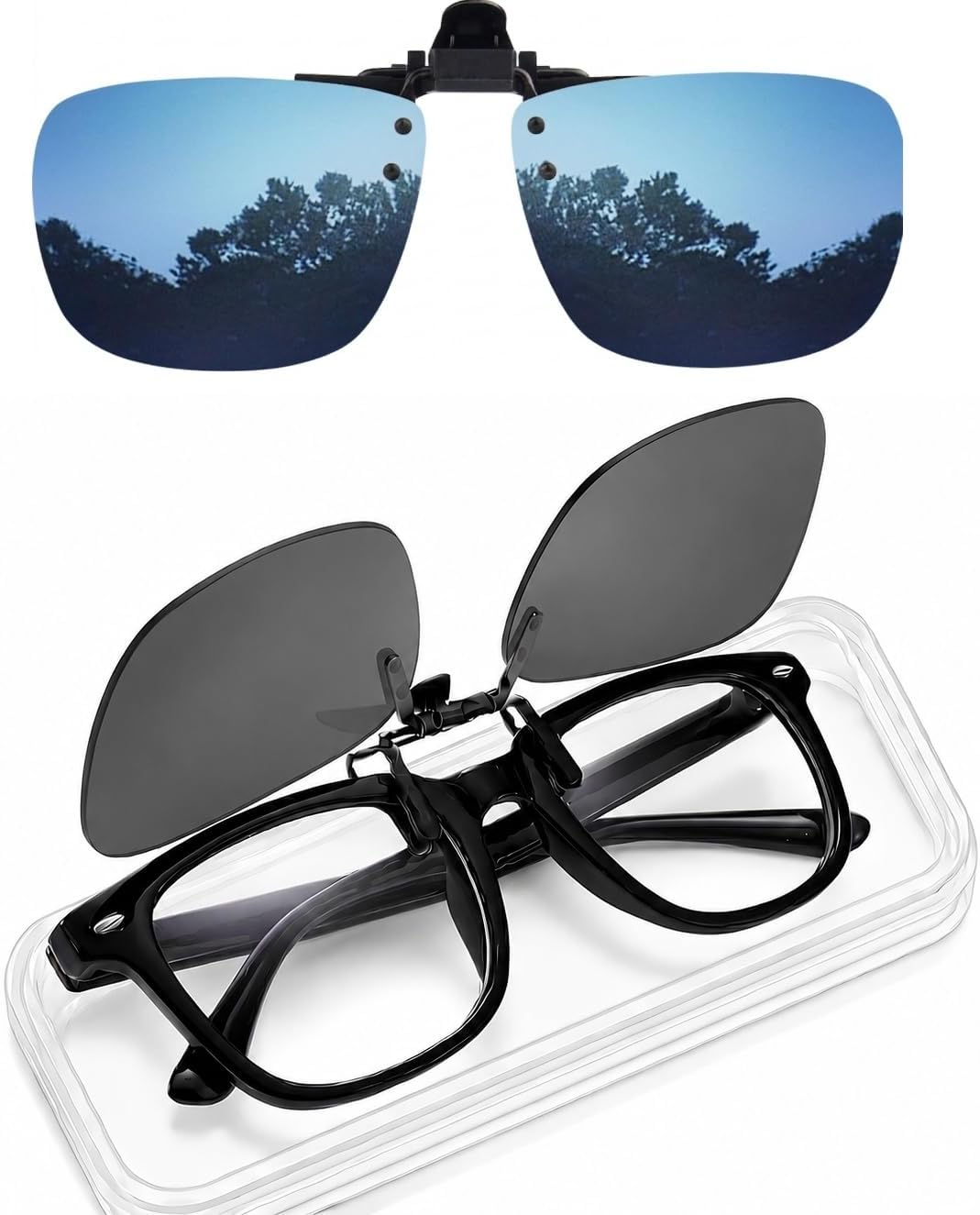
A clip-on is a tinted lens set that attaches over your existing prescription frame, most commonly with small sprung clips at the top of the lenses, sometimes with magnets on a purpose-built frame.
The spring type fits a range of frames rather than one exact model, which is why they are sold by width band rather than by frame reference.
Magnetic systems are neater and require a frame designed for them, so they are not retrofittable to what you already own.
Sizing a clip-on to your frame
The measurement that matters is the total width of your frame front, and secondarily the lens shape. A clip-on noticeably narrower leaves light entering at the sides; noticeably wider looks and feels wrong.
Take your lens width from the arm, double it, add the bridge, and use that as your target. Listings that state a compatible width band can be matched to that figure.
Shape matters too: a rectangular clip-on over a round frame will leave gaps at the top corners.
Polarisation, and what it actually does
A polarised lens blocks light waves oscillating in one plane, which is what removes glare reflected off flat surfaces — wet roads, water, car bonnets and snow. The effect is dramatic and is the main reason to choose polarised.
It is not the same as UV protection, which is a separate property. A lens can be polarised without blocking UV and vice versa, though most quality lenses do both.
Polarised lenses can make some LCD screens, including some car dashboards, difficult to read at certain angles.
UV protection is the part that matters medically
Cumulative UV exposure is associated with cataract formation and other eye surface conditions. A lens labelled 100% UV or UV400 blocks essentially all UVA and UVB.
A dark tint without UV protection is worse than no sunglasses at all, because the darkness dilates the pupil and lets more UV in. This is why unlabelled cheap sunglasses are genuinely a bad idea.
Check for the UV specification rather than judging by how dark the lens looks.
Advantages of clip-ons
Cost, mainly. A clip-on is a fraction of the price of a second prescription pair, and it updates automatically when your prescription changes because the prescription lens underneath is unchanged.
Portability is the other. A clip-on lives in a case in a bag and weighs almost nothing, whereas a second pair of glasses is a second thing to carry and lose.
For occasional outdoor use, a clip-on is almost always the sensible answer.
Advantages of a dedicated pair
Optically, a single prescription sunglass lens is cleaner than two lenses stacked, which can produce slight reflections between the surfaces and a small loss of clarity.
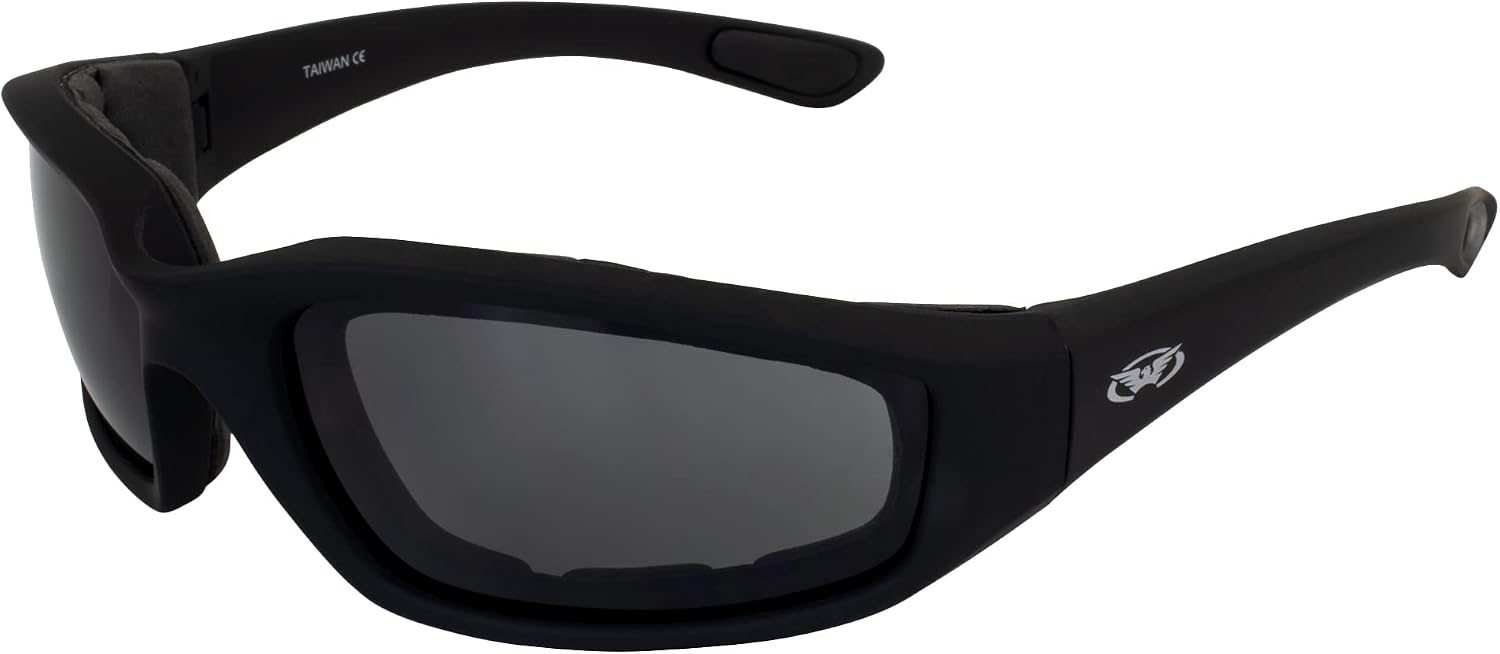
A dedicated pair also allows a wraparound frame, which blocks light entering from the sides — genuinely useful for driving and for anyone sensitive to glare.
For someone outdoors for hours daily, the difference in comfort is noticeable.
Flip-up versus fixed clip-ons
Flip-up designs let you raise the tinted lenses without removing them, which is convenient going in and out of buildings. The hinge is also the part most likely to loosen over time.
Fixed clip-ons are simpler and more secure but must come off entirely indoors, which means somewhere to put them.
Neither is better; it depends on whether you move in and out of sun repeatedly.
Looking after both
Store clip-ons in a soft case rather than loose in a bag, because the clips scratch the very lenses they attach to. Clean both surfaces before clipping on; grit between the two lenses is the fastest way to scratch a prescription lens.
Check the clip tension occasionally. A loose clip will fall off outdoors and be lost.
Never clip on over a dusty lens, and never wipe either lens dry.
Where to go next
Polarised clip-ons and standalone UV400 sunglasses are in Sunglasses & Clip-Ons.
Shop Sunglasses & Clip-Ons
Related articles