Eye Protection for Workshop and Outdoor Use
Safety eyewear is one of the few purchases where a specification is not a marketing detail. What matters is the standard the lens is tested to, how well the frame seals, and whether it fits over the glasses you already wear.
Impact standards, and reading them honestly
In the United States, the relevant consensus standard for occupational eye protection is ANSI Z87.1, marked on compliant frames and lenses. It defines impact tests and, in its higher tier, tests for high-velocity impact.
Where a manufacturer publishes compliance, we repeat it on the listing. Where they do not, we do not claim it, and you should treat unmarked eyewear as unrated.
This matters because ordinary fashion sunglasses can shatter on impact and become the injury.
Foam seals and what they are for
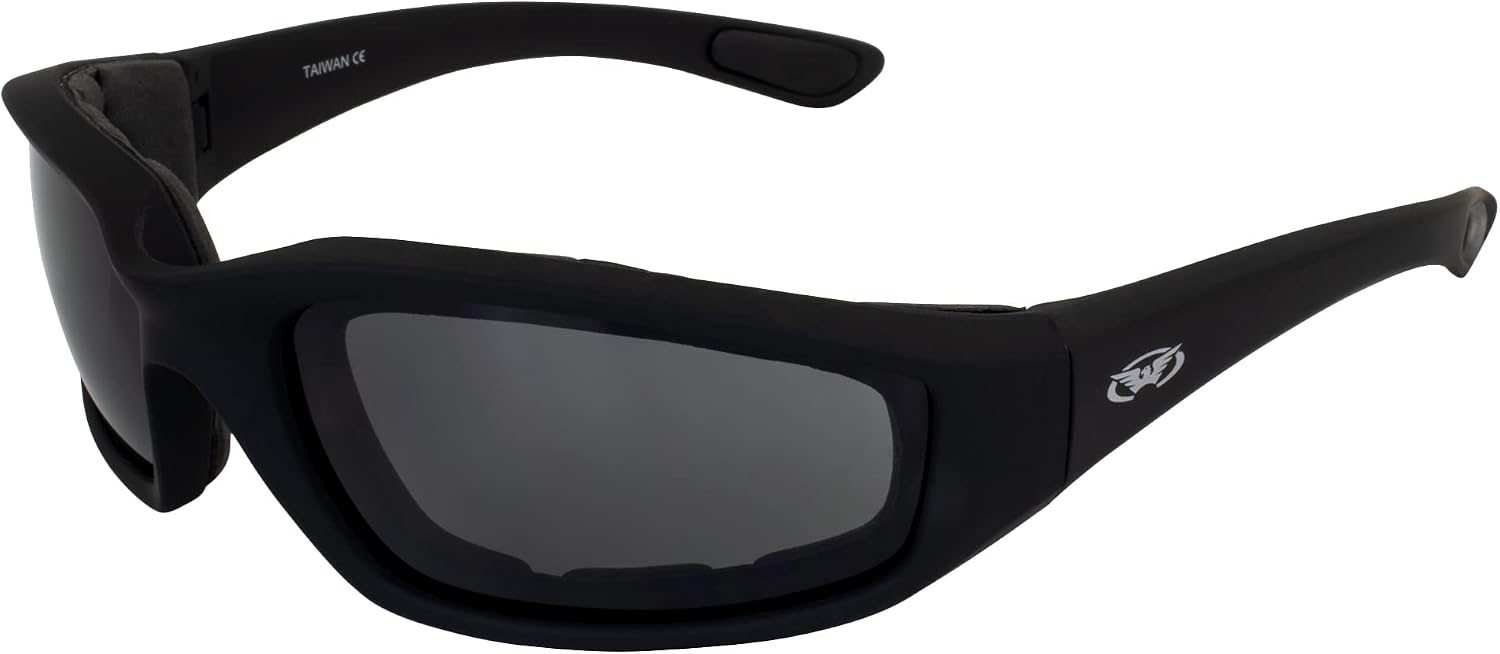
A foam gasket around the lens closes the gap between the frame and the face. Its purpose is to keep out dust, wind and fine particles that would otherwise enter from above and from the sides.
For riding, cycling and dusty work, that seal matters more than the lens tint. Wind-driven grit under a lens is both painful and a genuine corneal risk.
Foam also improves comfort against the brow and reduces the amount of light leaking in from above.
Fitting over prescription glasses
Over-the-glasses designs are cut wider and deeper so a standard frame sits inside them. Check the internal dimensions against your own frame width rather than assuming.
The alternative is a goggle with a prescription insert, which sits behind the main lens. It is more comfortable for long wear and requires a lens prescription to be glazed into the insert.
Wearing a tight-fitting goggle over a metal frame will bend the frame. If you use eye protection daily, a dedicated solution is worth the cost.
Fogging, and the ventilation trade-off
Fogging happens when warm moist air from your face meets a cooler lens. Sealed goggles fog more than vented ones, and vented ones admit more dust. There is no design that does both perfectly.
Anti-fog coatings work and they wear off, particularly if wiped dry or cleaned with the wrong product. Reapplication sprays exist and are worth carrying.
Indirect vents are the usual compromise: air moves, particles do not travel in a straight line to the eye.
Lens tint by task
Clear for indoor workshop use, where you need maximum light. Grey for general bright outdoor use, since it dims without shifting colour. Amber or yellow to increase contrast in flat or overcast light, which is why it is common for riding.
Very dark tints indoors are a hazard rather than a feature, because they reduce your ability to see what you are working on.
Photochromic lenses that darken in sunlight are convenient outdoors and respond poorly behind a car windscreen, which blocks the UV that triggers them.
Scratch resistance and lens material
Polycarbonate is the standard material for impact protection: it is light and extremely difficult to shatter. It is also relatively soft, so a hard coat is essential and even then it scratches more readily than glass.
Treat safety lenses as consumables. A scratched lens in your line of sight is a hazard because it distracts and diffracts.
Clean them the same way as prescription lenses: rinse first, never wipe dry.
Coverage, and the gap nobody checks
Look at the eyewear from the side while wearing it. If you can see daylight between the lens and your temple, debris can arrive by the same route. Wraparound frames and foam seals both close that path.
Brow coverage matters for overhead work. A frame that sits low leaves the area above the eye exposed to anything falling.
Fit is part of the protection, not a comfort preference.
Storing and replacing
Keep safety eyewear in a pouch rather than loose in a toolbox, where it will be scratched by everything else in there.
Replace after any significant impact, even if the lens looks intact. Polycarbonate absorbs impact by deforming, and a lens that has already done that once is not the lens it was.
Replace when scratches, crazing or a perished foam seal appear, all of which are normal wear rather than defects.
Where to go next
Foam-sealed goggles and wrap safety frames are in Safety & Sport Eyewear, with published standards quoted where the maker states them.
Shop Safety & Sport Eyewear
Related articles